
‘Phumelela’ – which means ‘succeed’ in Zulu – is a programme that we offer to children and young adults that live in the informal settlement of Dikatole in Germiston.
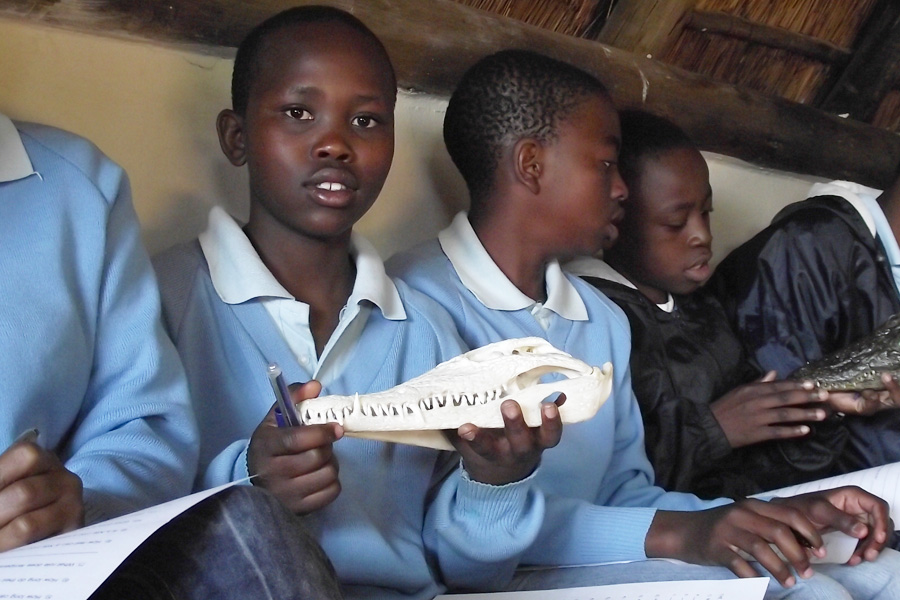
On Saturdays, we use our high school and teachers to provide extra lessons to help them succeed with their studies. We also teach life skills through a variety of workshops that include public speaking, self-defence, music, art and sport.
The following article is written by Papi “PK” Kubeka– an Alumni of our Phumelela program. It is well worth the read.
No one is an island. I am where I am because I come from a particular family, and I have always been hopeful about building a better future than the one I started with. But for education, my life would have turned out very differently.
I am passionate about the power of education, both for the individual and for society.
I was born in Qwaqwa, in the Free State, to a father who taught and a mother who built businesses. Between them I learned two lessons early: knowledge changes lives, and enterprise creates opportunity. Then, at a young age, I lost both of my parents. Grief divided my childhood in two, and I moved to Johannesburg to start a new life.
What I remember most is how much I was helped, and how much I decided to make of it. At Ekurhuleni Primary School I became a prefect in Grade 4 and attended a leadership camp, where I first understood that leading is really serving. At Sizwe Secondary School I spent my Saturdays at the Holy Rosary School Outreach Programme, and in 2017 I was made Student Leader.
Phumelela was the best time of my life. Through our school concerts I got to act, perform poetry, sing and play sport, and those experiences built the confidence and competitive streak I still rely on in my studies and my work. The education I received there was unlike anything I had known before. The hardest part was the lack of support from my family. I often felt I had to figure things out on my own, including pain and failure. What carried me through was the love and encouragement of my teachers, and the belief they had in us.
Phumelela taught me that resilience is built by showing up when it is hard, and that asking for help is a strength.
In 2019, a bursary from the National Department of Agriculture took me to the University of Pretoria. University was not easy. My beginnings were tough, because everything changed at once: a new place, a new academic world and a new personal life. Everything moved fast and I had to adjust quickly.
There was pressure to achieve great results, and to keep my bursary I had to keep progressing, with no family safety net behind me. Those years taught me to build a support network, to treat setbacks as data rather than verdicts, and that discipline matters more than talent.
Those lessons are why I earned my BSc in Agricultural Economics and Agribusiness in 2021 and my Honours in 2024, and why I am now completing my Master’s on whether carbon credits can give farmers a real financial reason to adopt agroecology.
Along the way I learned that farming is as much about numbers as soil. As an Agricultural Economics Intern at the Agricultural Research Council, I built enterprise budgets and cost-benefit models for farms turning over R500,000 to R5 million.
I analysed value chains across more than five commodities in R and Excel, surveyed over 100 smallholder farmers, and trained them in budgeting and agroecological practice. My analysis fed into advisory work with government and commercial stakeholders.
My reach has gone beyond the farm gate. As a Youth Representative in the World Food Forum’s second global cohort, I worked with young leaders from over 100 countries on food security, water risk and digital inclusion. At the Y20 under South Africa’s G20 presidency, my written recommendations were adopted into the working group’s final policy pack. At the World Agriculture Forum I produced policy briefs on climate finance and digital agriculture and coordinated a working group of 15 international members.
I have authored or co-authored nine publications, in Frontiers in Sustainable Food Systems, Land, TradeProbe, AgriAbout, Food For Mzansi and African Farming. They cover land reform, water risk, poultry trade and the rise of young agripreneurs.
I have kept learning too, through data science, sustainability and BRICS programmes, including a Standard Bank Group Sustainability Certificate.
I also founded Temo Green Gold, a climate-smart agtech venture. Our modular, solar-powered growing tray system saves up to 90% of the water conventional growing uses, and it is design- and patent-protected in South Africa, the USA and Australia.
Its mission is to create jobs for young people and feed vulnerable communities.
My one-year contract has recently ended, and I am eager to start my next chapter. I am looking for a role as an agribusiness or commercial credit analyst, or a bursary to continue my postgraduate studies.
I bring strengths in financial modelling and analysis, econometrics, commodity finance, farm-level cost-benefit analysis, ESG and sustainability, and climate finance and policy. African agribusiness doesn’t lack ambition or land. Too often it lacks financing that understands the data, and my aim is to translate agricultural data into financing decisions that unlock growth.
If you are an employer, funder or mentor who can open a door, or you know someone who can, I would love to hear from you at papikubheka16@gmail.com.
The boy from Qwaqwa who was handed a second start has never forgotten it. Now I want to help hand others theirs.
We’re so proud of you Papi. May you continue onwards and upwards.