
What Makes a Catholic School Different? (and why it matters, religious or not)
When looking at Catholic schools in Johannesburg, people often ask us: “Do we need to be Catholic?” The answer is simply, “no”. Catholic schools warmly welcome families from all religions and faiths.
Why would you choose to go to a Catholic school?
When selecting a school, you need to consider more than finding the best academics and sports facilities … The decision you make will set a foundation for the type of adult your child will become.
What impact will your child have in their community, and the future world?
Consider this as we discuss:
- What is different about a Catholic school?
- Why do people choose to go to a Catholic school?
- What is it like to go to a Catholic school?
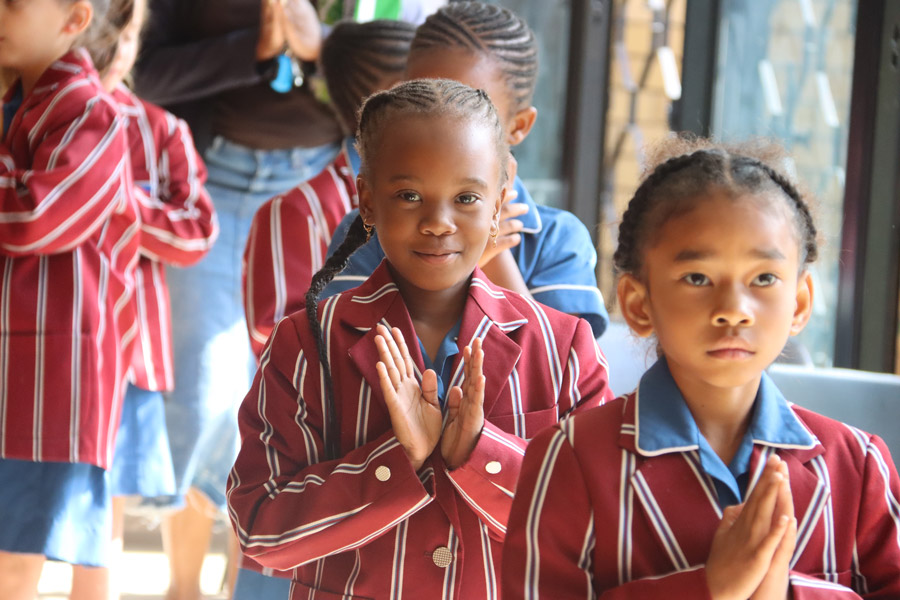
Image: Students at Holy Rosary School, a Catholic School in the greater Johannesburg area
What makes a Catholic School different?
To answer this question, we’ll start by digging into a deeper question: where do children learn good values? How do they learn to become people that help others and have a positive impact on the world?
In 1997, the South African government took religious education out of the government school syllabus.
Over many centuries, religion has been known to develop a person’s value system — it follows that when religion was taken out of schools, we need to then consider how children learn good values?
Catholic schools instil in children a Christian value system, which nurtures their spirit, and empowers them to make the right choices.
Some examples:
- Self-discipline
- Respect for self and others
- Treating people with kindness
- Joy in sharing with others
- Finding faith when life brings challenges
While standard schooling focuses on grades and sports, a Catholic education nurtures the whole child — body, mind, heart, and spirit.
Let’s take a deeper look at what there is at the heart of a Catholic school education, as we experience at Holy Rosary School.
The 4 Heartprints of a Catholic School
1. A solid moral foundation
In today’s world, it is easy for children to get confused about values. When religious education was removed from standard school curricula, a school’s moral compass can easily turn toward commercial success or simply “winning.”
Catholic schools are run on a not-for-profit basis, so their focus is on educating and nurturing children.
Catholic schools have an agreed, signed statement of faith. They are proud to be religious-based schools.
This means your child is educated in an environment that understands its purpose. Our moral culture isn’t built on shifting sand — it is anchored in the solid cornerstone of Christianity.
Catholic schools help children develop into morally strong adults who know how to use knowledge for good.
2. Nurturing spirit
At many Catholic schools, traditions are woven into the rhythm of the day.
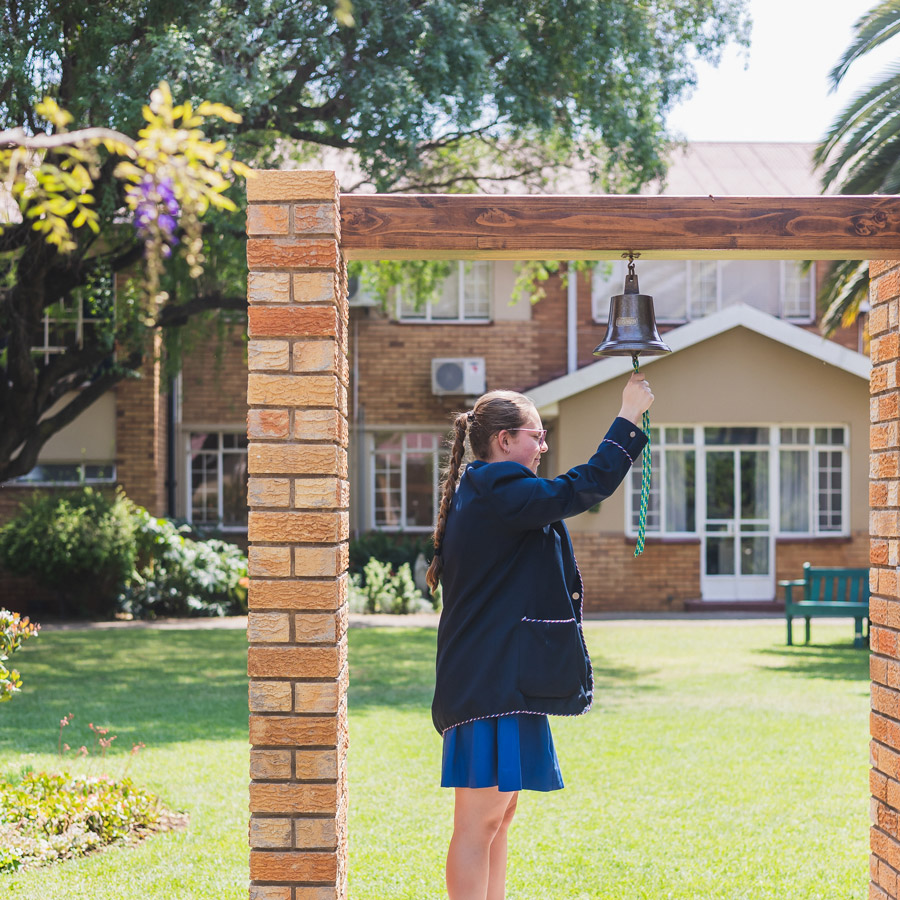
One of these traditions is the ringing of the Angelus Bell at 12:00 and everyone stops what they are doing for a quiet moment of reflection and prayer.
Children have the opportunity to attend mass and chapel services at the school chapel.
Singing in the choir and going away on retreats are further examples of activities that nurture a spirit of joy and reflection.
Teachers are part of the schools’ greater Christian community. They pray for the children in their charge, support those who are struggling, and actively show examples of gratitude and grace.
3. Natural culture of excellence
When you nurture a child’s unique, God-given talents and encourage her to pursue what she loves, excellence follows naturally.
Children aren’t pressured – they are helped to discover natural talents and passions.
A Catholic school community typically thrives across four main areas:
- Academics: Catholic schools are known for academic excellence. For example, Holy Rosary has consistently maintained a 100% IEB Matric pass rate and, on average, their matric results are 10% higher than the national IEB average.
- Sports: Catholic schools encourage sports by treating physical health as a vital part of a child’s holistic, God-given development. They use team sports to instil core spiritual values like self-discipline and integrity, and the development of talent, transforming the playing field into a space for character building and excellence.
- Service: Children are taught to share their talents in service to the community. They learn from the examples shown by leaders and through service initiatives, with many children contributing literally hundreds of hours of community service.
- Culture: Creative talents are God-given gifts that allow us to express and share our higher selves with others. Through cultural activities like music, drama, and public speaking, students find their authentic voices, build self-confidence, and use their artistic expressions to connect with and uplift the broader community.
The areas of service and culture receive greater focus in a Catholic school. They contribute to producing well-rounded adults who are able to be “servant leaders” in the future.
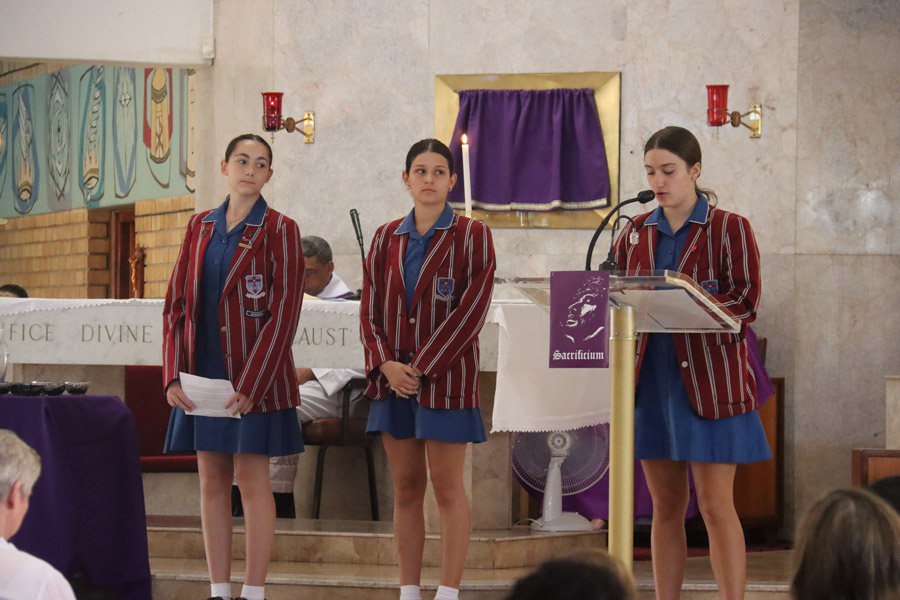
Image: Students sharing words of wisdom in the Holy Rosary Chapel
4. For the 4 heartprints of a Catholic School:
What often surprises people about attending a Catholic school is how quickly one becomes part of a caring community, and how deeply it connects to lifelong tradition.
Many Catholic schools have a chapel on the property, or nearby. Church life becomes a comforting part of school and community life.
Children are brought up with exposure to God and His love for children. This offers a doorway into faith and a relationship with God if they choose to walk through it. It gives them a moral framework to hang their values on, empowering them to make the right choices when the world gets hard.
Families attend regular Mass and church services, weddings and memorial services.
This close integration creates a beautiful sense of heritage. It is a place where traditions live for decades; where older girls often return years later to get married in the very same chapel, or where families gather to celebrate the milestones of life together.
Holy Rosary is integrated with the Saint Thérèse Catholic Church, which sits on an adjoining property.
What’s it like to go to a Catholic School?
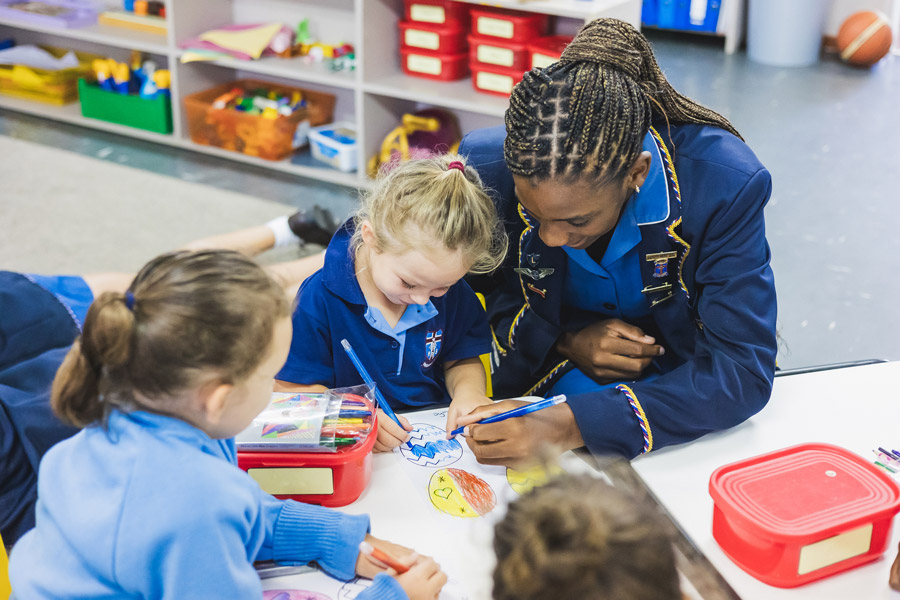
Step onto the campus of Holy Rosary, a Johannesburg Catholic School, during the week, and you’ll see a school that celebrates life with joy, music, ringing bells, many exciting activities where the energy is contagious.
Lessons abound. Sometimes these are hard lessons – but there’s the support and help of a Catholic community when life throws a curveball.
Children learn vital “soft skills” that the modern world desperately needs: patience, joy, mutual respect, and the ability to work in harmony with others.
At Holy Rosary School, the girls are academically strong, but they learn more than just academics. They are inspired by Christ to contribute to society in a meaningful way and become women who stand firm in faith.
To find out what it’s like to be a Holy Rosary Girl, book a tour here.